
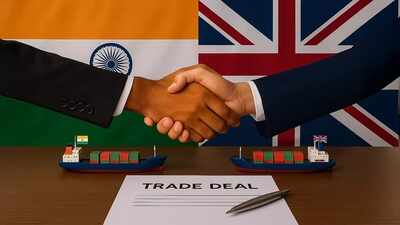
By Agneshwar Sen, Trade Policy Leader, EY IndiaTrade agreements are usually sold through arithmetic: how many tariff lines fall, how much trade may rise, which sector wins and which sector complains. The India-UK Comprehensive Economic and Trade Agreement (CETA), along with the Double Contribution Convention (DCC), deserves to be read differently. Taking effect on July 15, 2026, it is not merely another free trade agreement. It is a statement that India is now willing to negotiate from a position of confidence, accept higher-standard disciplines where they serve its interests, and still protect its core domestic sensitivities.Yes, the tariff story matters. Britain will eliminate duties on 99% of Indian tariff lines, and that is no small concession. But the real point is sectoral: the benefits fall squarely on labour-intensive industries that create jobs at scale. Processed foods, marine products, engineering goods, auto components, leather, footwear, textiles, clothing, chemicals and pharmaceuticals all gain sharper access to a mature market. For hubs such as Tiruppur, Surat and Ludhiana, this is not a theoretical advantage. It helps close a competitiveness gap with Bangladesh, Pakistan and Cambodia, which already enjoyed duty-free access to the UK.This is where CETA becomes politically significant. India’s export story has too often been overdependent on services and underwhelming in labour-intensive manufacturing. A deal that makes garments, footwear, seafood, jewellery, chemicals, machinery and auto parts more competitive speaks directly to the unfinished agenda of jobs-led growth. Marine products could open up new space for coastal economies from Kerala to Odisha. Pharmaceuticals gain a stronger footing in Europe’s largest single medicines market. None of this guarantees success, but it removes an avoidable handicap.Equally important is what India did not concede. Dairy, cereals, millets, edible oils, oilseeds, apples and several vegetables remain outside the agreement. India’s own tariff liberalisation is phased and calibrated, with immediate elimination covering only about 30% of trade value and wider cuts spread over five, seven or ten years. Critics may call this cautious. It is better understood as prudence. India has learnt, sometimes painfully, that market opening without domestic adjustment can become political self-harm.The services chapter is where the agreement becomes more than a goods bargain. For decades, India has asked developed economies to take mobility seriously rather than bury it in vague “Mode 4” language. CETA secures structured, quota-backed access for contractual service suppliers and independent professionals in IT, engineering and design, including an overall allocation of 20,000 annual UK service-supplier visas for Indian nationals. Add to that post-study work opportunities for Indian graduates and dedicated slots for chefs, yoga instructors and classical musicians, and the message is clear: India is exporting not just software, but skills, culture and human capital.The DCC gives this mobility chapter real economic weight. Indian professionals posted to Britain have long paid into National Insurance without any realistic expectation of drawing benefits. Extending the exemption period from three to five years reduces a costly distortion for employees and employers alike. For India’s IT companies, for whom the UK is a critical market, this is not a symbolic win; it directly affects project economics.Some of CETA’s least glamorous provisions may prove the most useful. Self-certification of rules of origin, treaty-bound visa processing timelines, removal of the economic-needs test for UK firms establishing branch offices in India, and a pathway for mutual recognition of professional qualifications all reduce friction. For large companies, this improves predictability. For MSMEs, it could be the difference between using an agreement and merely reading about it.The bigger strategic shift lies in the agreement’s architecture. Labour standards, environment, gender equality, anti-corruption, government procurement and good regulatory practice all find space in a deal with India. These are areas New Delhi once treated with deep suspicion, fearing they would become disguised protectionism. That concern has not disappeared. But CETA shows India is now prepared to engage with such chapters when safeguards are built in and development space is preserved. Government procurement, in particular, marks a first, even as India retains domestic value-addition and supplier protections.The agreement should not be oversold. More than half of India’s exports to Britain already entered duty-free, and tariff cuts alone will not create exporters. Rules-of-origin compliance, UK standards, logistics, product quality and utilisation by MSMEs will decide whether CETA becomes a trade statistic or a trade strategy. But that is precisely the point. The government has created a runway in a high-value market; industry must now take off. If CETA is remembered well, it will not be because it made some goods cheaper at the border. It will be because it marked India’s arrival as a more confident, selective and sophisticated trade negotiator.