

“Fortune favours the bold.” Few stories in India’s technology history illustrate this better than the remarkable journey that transformed a country struggling with red tape into one of the world’s largest software-exporting nations.Long before Bengaluru became India’s Silicon Valley, software engineers faced a challenge that would seem almost unbelievable to today’s students.In 1985, if an engineer in Bengaluru wrote code for an American client, there was no internet to transfer it instantly. The code had to be stored on magnetic tapes, packed into boxes, transported to an airport and flown thousands of kilometres to the United States. Developers often waited for weeks to discover whether their software worked.Everything changed because of one experiment.American technology giant Texas Instruments wanted to establish a direct communication link between its Bengaluru office at Sona Towers on Miller’s Road and its headquarters in Dallas, Texas.The company needed a dedicated 64 kbps satellite connection. Today, that speed would appear painfully slow, but in 1985, it represented cutting-edge technology.There was only one problem: India’s regulatory system had no provision allowing a private foreign company to operate international telecommunications equipment.
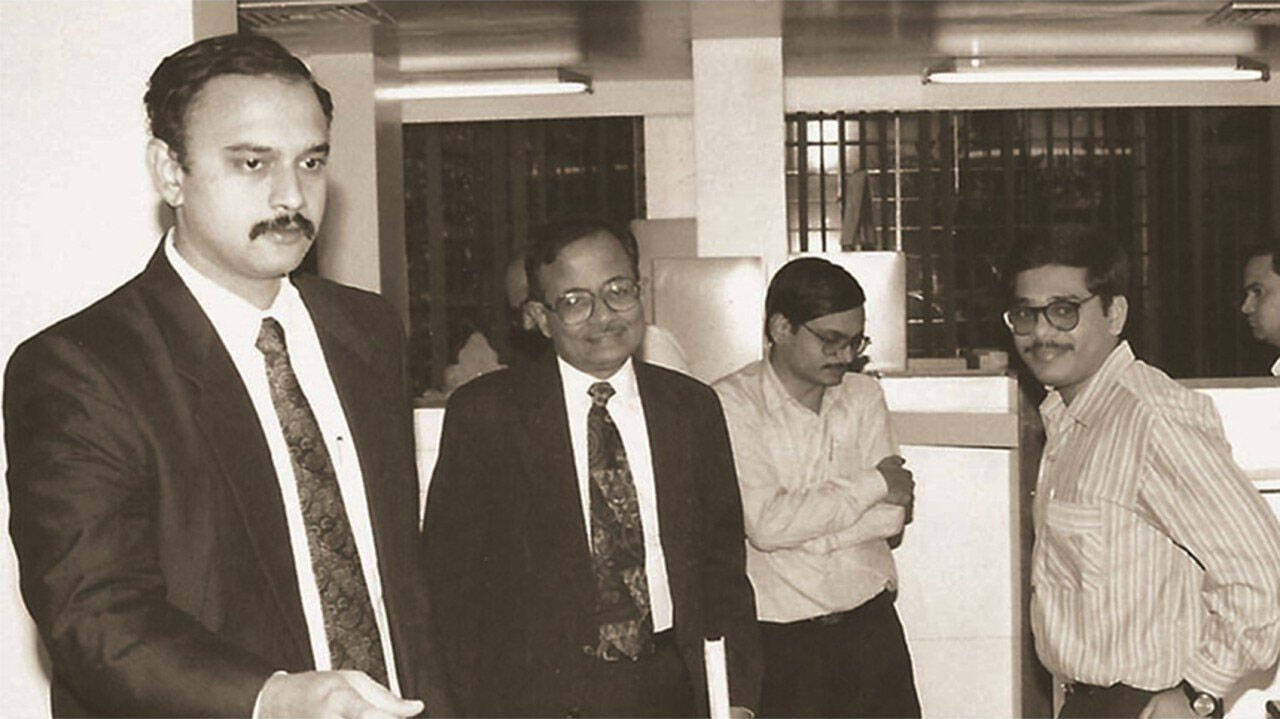
How N Vittal and a bullock cart helped spark India’s IT revolution
The satellite dish that arrived on a bullock cart
Government departments demanded security clearances. Officials worried that a giant satellite dish could become a tool for espionage.After months of bureaucratic hurdles, the equipment finally reached India. Yet another obstacle emerged.The roads of 1980s Bengaluru were not designed to transport such large and delicate equipment.The solution was as unconventional as the challenge itself.The satellite dish that would eventually help transform India’s software industry was carried through Bengaluru on a wooden bullock cart pulled by two white oxen.When engineers finally switched on the system, history was made.For the first time, code written in India could be transmitted directly to the United States, compiled on a computer in Texas and returned to Bengaluru almost instantly.Distance had suddenly become irrelevant.
The man who realised one company’s solution could become a national strategy
While the Texas Instruments experiment proved that India possessed the engineering talent needed to compete globally, it also exposed a serious problem.Operating a private satellite link reportedly cost around Rs 45 lakh annually in licensing and bandwidth charges alone.Indian startups simply could not afford it.That is when N Vittal, a 1960-batch IAS officer from the Gujarat cadre and Secretary of the Department of Electronics between 1990 and 1996, entered the picture.Instead of asking every company to build its own expensive communication infrastructure, Vittal proposed a revolutionary idea: shared digital highways.His answer was the creation of Software Technology Parks of India (STPI).
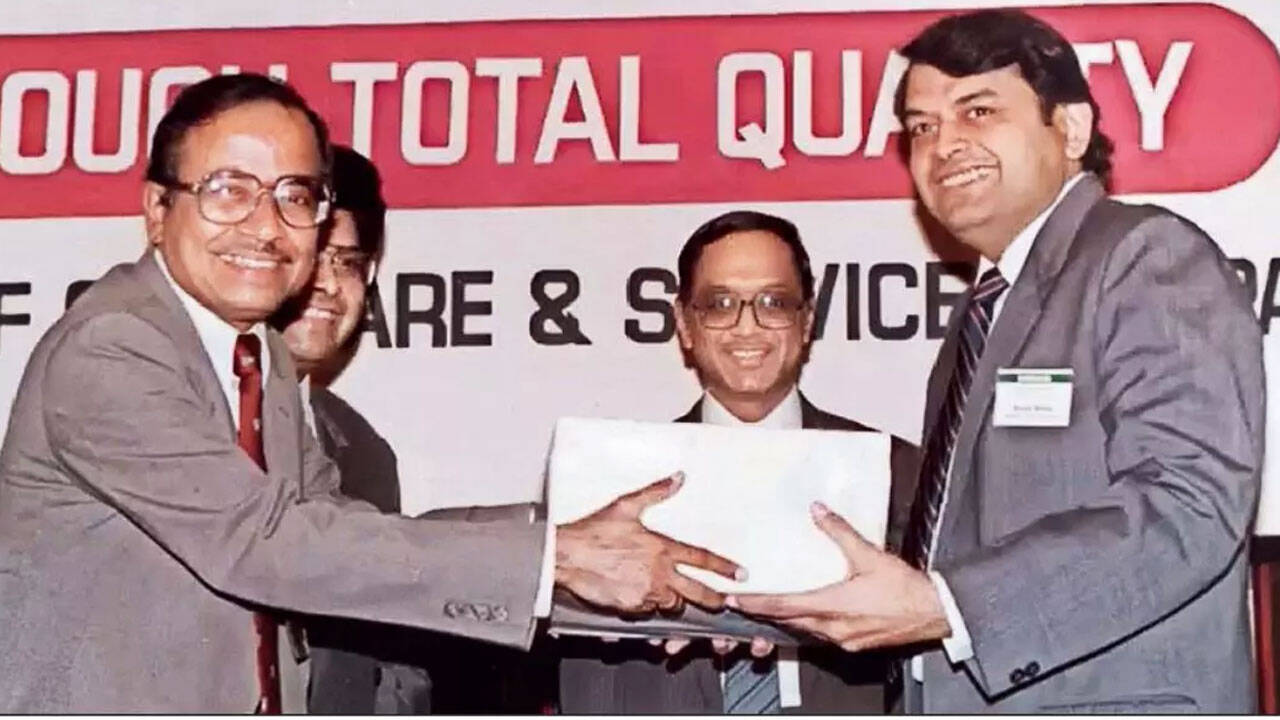
N Vittal (extreme left), with (L to R) then Nasscom president Dwwang Mehta, Infosys founder NR Narayana Murthy and Nasscom co-founder Harish Mehta at an event in 1992. (TNN)
The Rs 100 million industry that was challenged to become a giant
In 1991, India’s software exports stood at approximately $100 million.According to accounts from industry leaders, Finance Secretary Bimal Jalan challenged Vittal during discussions on reforms.If the government removed barriers, simplified regulations and accepted industry demands, how much could software exports grow?Vittal reportedly promised $400 million.When he announced this ambitious target before technology entrepreneurs at a NASSCOM event, many industry leaders were stunned.Yet Vittal pressed ahead.STPI introduced shared satellite infrastructure, duty-free imports of computer hardware, simplified approvals, tax incentives and easier access to international markets.Small companies no longer had to invest enormous sums in communication infrastructure.They simply plugged into a system designed to support innovation.
The lesson today’s students should remember
The story of India’s IT revolution is often associated with entrepreneurs such as Narayana Murthy, Azim Premji and other technology pioneers.But behind every successful industry are people who build the systems that make growth possible.N Vittal understood something that remains relevant even today: talent alone is not enough. Innovation also requires the right ecosystem.A satellite dish carried on a bullock cart may sound like an unusual image in the age of artificial intelligence and cloud computing.Yet that image represents one of the most important turning points in modern India’s technological journey.Sometimes, a country’s future does not begin in a gleaming technology park.Sometimes, it begins with one bold idea, one determined bureaucrat and a belief that an impossible target can become reality.Disclaimer: This article is based on publicly available accounts, interviews, historical records and published reports related to the evolution of India’s software industry and the contributions of N Vittal.