
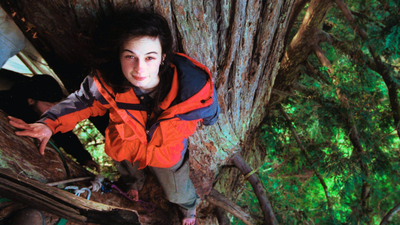
At 23, Julia Butterfly Hill climbed nearly 180 feet into the canopy of a towering 1,000-year-old redwood in northern California, expecting to spend only a few days there as part of an environmental protest. Instead, the ancient tree, known as Luna, became her home for the next 738 days. Living on two small wooden platforms suspended high above the forest floor, she endured violent storms, freezing temperatures, isolation and constant pressure from loggers, determined to stop the centuries-old giant from being cut down. Her remarkable act of courage became one of history’s longest and most famous tree protests, helping save Luna and inspiring environmental activists around the world.
How Julia Butterfly Hill’s 738-day tree protest began
Julia Butterfly Hill was born on February 18, 1974, in Mount Vernon, Missouri, but spent much of her childhood travelling across the United States because her father was an itinerant evangelical minister. Her unusual middle name came from a childhood hike during which a butterfly landed on her finger and stayed there until the walk ended. Years later, after surviving a serious car accident caused by a drunk driver in 1996, Hill began questioning the direction of her life. During her recovery, she travelled to northern California, where she joined environmental activists trying to protect the region’s ancient redwood forests from logging.
A protest that was meant to last only a few days
When Hill volunteered to climb Luna on December 10, 1997, she expected to remain in the tree for only a few days as part of a rotating protest. But after spending time among the towering branches of the ancient redwood, she realised she could not leave while it remained under threat. What began as a brief act of civil disobedience gradually evolved into a 738-day mission that attracted global media attention and turned Luna into an international symbol of forest conservation.
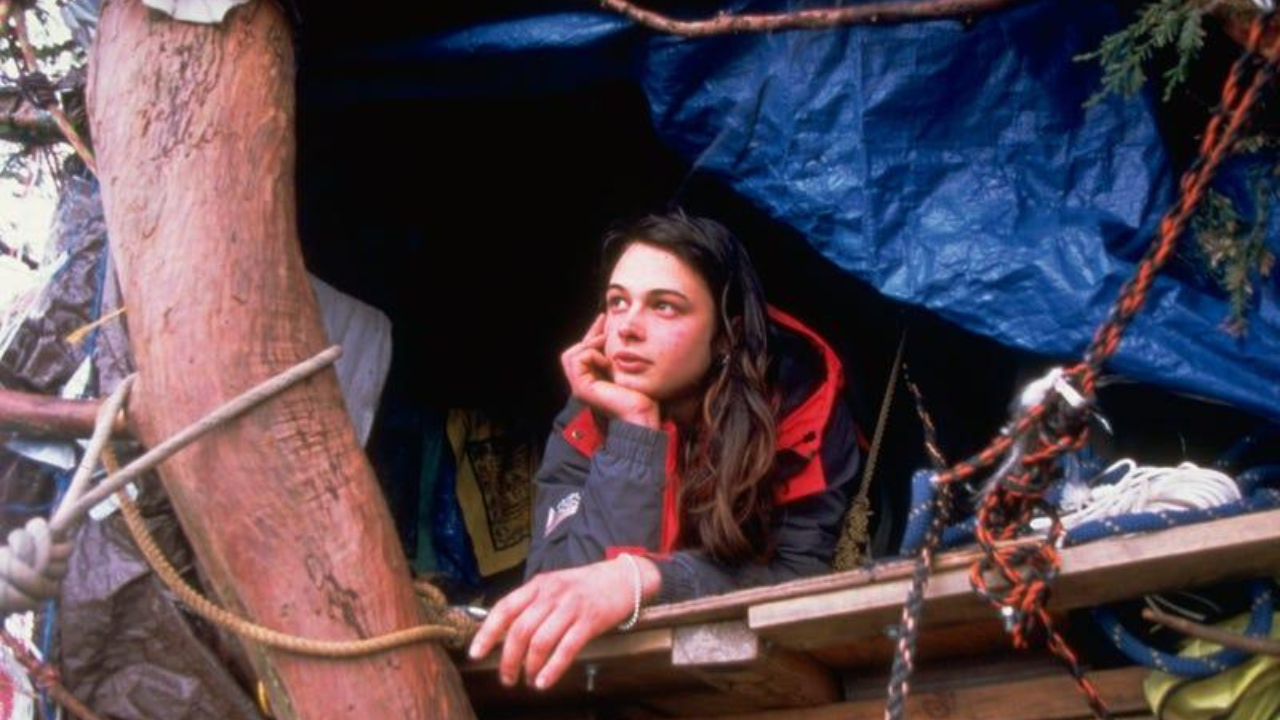
What life was like nearly 180 feet above the ground
For more than two years, Luna became Hill’s entire world. She lived on two small wooden platforms measuring roughly six by eight feet, protected only by tarps from rain, wind and snow. Volunteers on the ground hauled up food, drinking water, books, batteries and supplies using ropes. Solar panels powered her communication equipment, allowing her to give interviews to journalists from around the world without ever leaving the tree.She celebrated birthdays, Christmases and countless ordinary days in the canopy while sharing the forest with birds, squirrels and other wildlife. The isolation was immense, but she later described developing a profound connection with the ancient redwood and its surrounding ecosystem.
Storms, helicopters and constant pressure
Life in Luna was anything but peaceful. During the powerful El Niño storms of 1997 and 1998, the redwood swayed dramatically in winds approaching 70 miles per hour. Hill endured freezing rain, relentless dampness and violent gusts while living nearly 180 feet above the ground.She also faced constant pressure from Pacific Lumber Company, which owned the land. According to Hill and contemporary reports, helicopters flew close to the tree, security personnel monitored the protest and various attempts were made to persuade her to abandon the occupation. Despite the physical and emotional challenges, she refused to climb down.
The agreement that finally saved Luna
After more than two years of negotiations, Hill and Pacific Lumber reached an agreement in December 1999. The company agreed to permanently protect Luna and a buffer zone of nearly three acres surrounding the tree. In return, Hill ended her protest and descended from the redwood on December 18, 1999, after spending 738 consecutive days in its branches.The peaceful resolution transformed Luna into a globally recognised symbol of environmental activism and demonstrated how one determined individual could influence the future of an ancient forest.
Luna survived another attack after the protest
The story did not end when Hill climbed down. In 2000, an unknown vandal used a chainsaw to carve a deep wound into Luna’s trunk. Arborists carefully treated the damage and installed supports to help stabilise the ancient tree. Despite the attack, Luna survived and continues to stand today under the care and monitoring of conservation groups.Following her historic protest, Hill wrote the bestselling memoir The Legacy of Luna, founded the Circle of Life Foundation and became an internationally recognised speaker on environmental protection, sustainability and social justice. Her story continues to inspire people across the world who believe that determined individuals can make a lasting difference.More than 25 years after she first climbed into Luna’s branches, the ancient redwood still stands in California’s coastal forest. For most visitors, it is simply a magnificent tree. For Julia Butterfly Hill, it became a home, a symbol of hope and proof that extraordinary change can begin with one person refusing to give up.